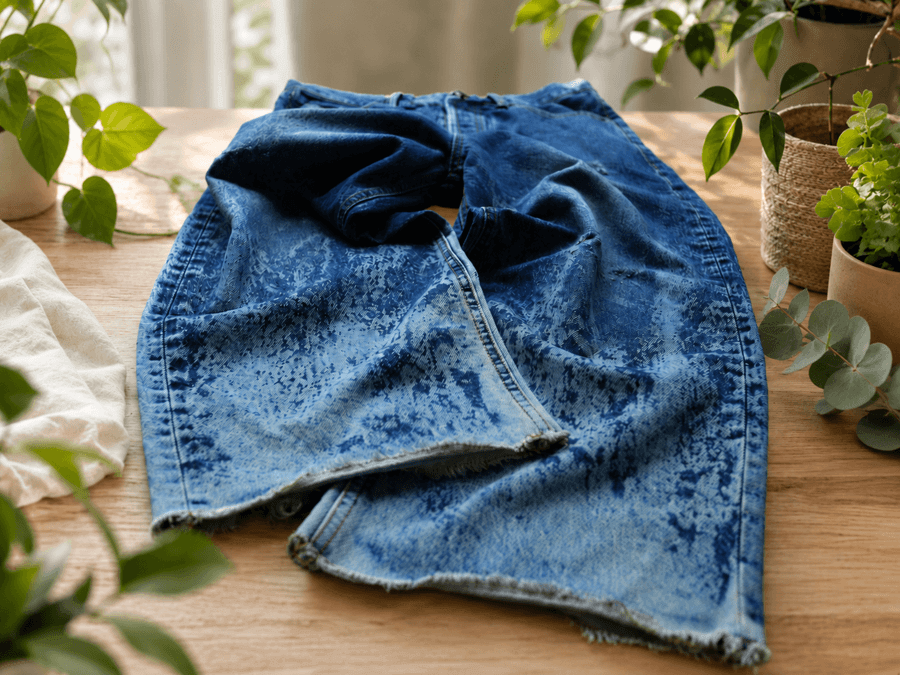
Denim Mill
Sustainable production at every loom
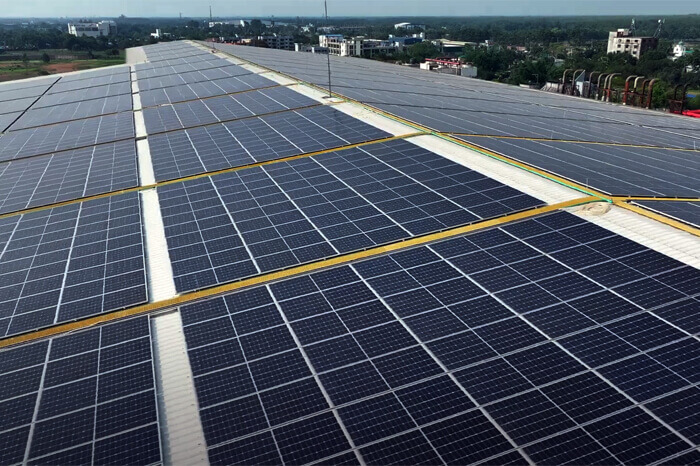
Clean Energy
Climate action goal
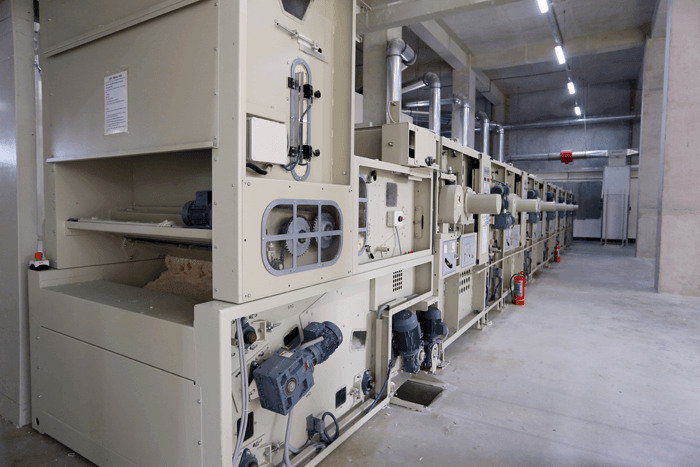
Material
Organic cotton & recycled fibers
Go Green Initiative
"Every thread we pull from earth,
we owe back — cleaner, smarter, and built to last."
Water Stewardship
Climate Action
Sustainable Materials
Green Chemistry
Waste & Circularity
Denim Mill
Sustainable production at every loom
Clean Energy
Climate action goal
Material
Organic cotton & recycled fibers
Every commitment tracked.
Every target made public.
Reducing groundwater dependency through water recycling, reuse, rainwater harvesting, and improved process efficiency. From the 2019 validated baseline, groundwater extraction has been reduced by 31.6% by 2025, advancing toward our 50% reduction target by 2027. We continue to strengthen alternative water sources and resource-efficient practices across our operations, with progress independently verified through third-party assessment.
Transforming wastewater into a resource through integrated water management, recovery, treatment, recycling, and reuse, including rainwater and domestic wastewater recovery. Our approach advances toward a closed-loop water system that minimizes liquid discharge, maximizes water recovery, and increases water reuse across our operations.
Accelerating decarbonization through energy efficiency, renewable energy integration, process optimization, and the transition toward lower-carbon energy sources. From the 2019 baseline, normalized GHG emissions intensity has improved by 35.1% by 2025, demonstrating continued progress in reducing emissions relative to production. Absolute GHG emissions achieved a 10.3% reduction by 2024, while the 2025 increase reflects higher production activity. Overall, continued improvement in emissions intensity supports our pathway toward the 56% Scope 1 & 2 absolute reduction target by 2030.
Our SBTi-validated mid-term target is supported by a strategic transition toward renewable energy, energy efficiency, process decarbonization, and value-chain engagement, accelerating emissions reduction across our operations and supply chain toward 2034.
Our long-term ambition is to achieve Net-Zero by 2050 through continued decarbonization, renewable energy transition, resource efficiency and progressive reduction of value-chain emissions, supporting a resilient and low-carbon future.
Advancing toward 100% sustainable materials by 2030 through increased use of Better Cotton, organic fibers, regenerative fibers, recycled fibers, sustainable man-made fibers and other preferred sustainable materials, with 61% achieved by 2025.
Advancing end-to-end digital traceability through integrated internal systems covering fiber, yarn and fabric processing, production data, material flows, and supply-chain information, enabling greater transparency, data integrity, and traceability across our value chain.
As a ZDHC Contributor, Envoy Textiles is progressing toward ZDHC Supplier to Zero Level 3 by 2030, with Level 2 completed and validated in 2025. Our roadmap covers chemical input, wastewater, and sludge management, with 100% ZDHC MRSL conformance achieved in 2025, supporting continuous improvement toward Level 3.
Advancing toward 100% chemical screening by 2028, supporting the phase-out of hazardous substances and safer production. With Screen Chemistry already underway, our roadmap focuses on strengthening chemical transparency, safer alternatives, and MADE IN GREEN readiness.
Advancing toward 20% recycled fiber use by 2028 with the share increasing from 4.35% in 2023 to 7.89% in 2025 and 14.81% by June 2026. Expanded recycling capacity and growing use of pre- and post-consumer recycled fibers are supporting continued year-on-year progress toward a more circular material portfolio.
Continuously reducing process waste across operational sections through targeted waste-reduction KPIs, process optimization, product repair and re-finishing, and resource recovery, embedded within our QMS culture of continual improvement. These efforts enhance material efficiency, extend product value, and support a more circular production model.
Since 2025, our domestic waste-to-biogas initiative has been converting organic waste into biogas and fertilizer, supporting resource recovery and circularity while benefiting 25 local families. The initiative aims to progressively achieve 100% conversion of suitable domestic organic waste.
Traceability at Envoy Textiles
End-to-end, system-based traceability across our value chain-supported by digital platforms, independent traceability verification, dedicated teams, and customer-focused data management.
Powered By Technology
Our dedicated traceability team integrates system-based production records, digital platforms, verification technologies, and customer-specific requirements to provide reliable and transparent information from fiber origin to finished fabric.
Progress across all five pillars
49.8% sustainable material · 41% water reduction · 16% GHG cut · 2.2 MWp solar live
50% water reduction & full DPP
Zero Liquid Discharge + Digital Product Passport across all product lines
Expand solar to 8 MWp total
4.6 MWp installing now · final 1.2 MWp phase to complete the expansion
100% sustainable material · 56% GHG cut
Full Circular Waste Model alignment. Zero compromise on planet or product.
Zero compromise on people & planet
Circular. Traceable. Accountable. Every meter of denim. Every decision.
Sustainability isn't a campaign. It's the standard against which every meter of denim we produce is measured, now, and for ever.